Sunday hurts

My Sundays are spent combing through the Mail & Guardian, City Press, the Sunday Independent, the Sunday Times – and a host of online news sources.

I do this to compose a news review and analysis to be on the desks of my clients by 06h30 on Monday mornings.

It is an arduous task, made all the more so because to get to the good stories one has to plough through the turgid rubbish, misinterpreted rumours and exaggerated rehashes of corporate, government and party press releases.

There are many exceptions. Johnny Steinberg in the Sunday Times is peerless. Percy Mabandu’s Dashiki Dialogues in City Press is a welcome respite.

At least half of the content of the weeklies is good, solid stuff, written by thorough and skilled journalists (too numerous to name here) and many of them have been kind and helpful (those are slightly different things) to me over the years and I would hate to impugn their professionalism.

But it’s the other half of the content that makes my Sundays a gloomy, brooding time of the week – and there are moments when I feel a visceral antipathy to the physical presence of the newsprint scattered around my apartment.

Okay, I am glad I got that off my chest … anyway, here is an extract from yesterday’s news summary – obviously all of it taken from that part of the weeklies written and edited by the thorough, professional, kind and helpful journalists I was refering to earlier …

Notes on the weekend press 19.11.2012

There were some interesting and revealing leaks in the Sunday newspapers:

Confidential NPA communications raise questions about grounds on which Zuma corruption charges were dropped in 2009

The Sunday Times led with an exclusive based on 300 pages of leaked internal emails, memos and minutes of meetings of the National Prosecuting Authority (NPA) concerning the dropping of corruption charges against Jacob Zuma on 6 April 2009. The NPA failed to stop publication in a high court interdict on Saturday.

The story in the Sunday Times indicates that the senior state prosecutors felt they had a winnable case against Zuma and that attempts by Zuma’s legal team to use the ‘spy tapes’ to argue that the prosecution was politically motivated was “blackmail” – and that the prosecution should have gone ahead despite the threats from Zuma’s legal team.

So what? Good question. Zuma’s ‘Stalingrad Defence’ against the corruption charges (fighting door-to-door, street-by-street; retreating, but at enormous cost to the enemy) probably has years to run – pushing any possibility of a trial into the dark and distant future. Anyway, an ANC that uses its overwhelming parliamentary majority to block a motion of no-confidence in the president (as it did this week – see below) is unlikely to shrink from passing legislation that exempts its leader from the indignities and distraction of a corruption trial.

Internal reports of patronage, factionalism and vote-rigging

Two reports to the weekend meeting of the ANC NEC were leaked to the Sunday Independent and City Press, one from Nkosazana Dlamini-Zuma and one from Gwede Mantashe. They both paint a bleak picture of bitter struggles for power in the ANC.

Dlamini-Zuma’s report deals with 425 internal ANC complaints about the 2011 municipal elections – and concludes that a significant number of ANC councillors were fraudulently nominated. “In many cases”, she argues, “ANC branches and members are no longer viewed as living, dynamic units consisting of human beings … (They have become) membership forms that constitute a bulk commodity”.

Gwede Mantashe, in a draft of his secretary-general’s report, describes intense factionalism “bleeding the organisation”.  He suggests the ANC Youth League has positioned itself as a “counterforce” and that “the determination of some members … to destabilise the organisation and disrupt meetings as a tactic to get what they want … is a clear sign of a revolutionary movement that has been infiltrated.”

So what? It is a plus for the ANC that its leadership is anxious and forthright about the battle for patronage and position that takes place within its ranks. It might even be a plus (for the ANC) that all that energy is going into ANC leadership contests – because it is an acknowledgement that the ANC remains, for most intents and purposes, the only show in town. However, at some point, voters are likely to become disillusioned if the party is better at ensuring economic advancement for its leaders than it is at getting the government to deliver services more effectively.

Finally, the fact that high-level confidential internal party reports like these keep finding their way into the press is an excellent demonstration of the ills those very reports rail against.

Motlanthe wanted no confidence vote to go ahead

The deputy president chairs the ANC’s political committee in parliamentary which gave the nod for the no-confidence in Zuma motion to be debated in the parliament. This was overruled by the party’s caucus the next day.

So what? This is being interpreted as another blow to Motlanthe’s electability at Mangaung. As always, Motlanthe actually took no view during the committee meeting – it was National Council of Provinces chairman Mninwa Mahlangu and parliamentary speaker Max Sisulu who were in favour of allowing the motion to be debated and ANC chief whip Mathole Motshekga who was opposed. Motshekga convened a special sitting of the ANC’s parliamentary caucus when he lost the argument and the caucus hastily overturned the decision. We think the impact of this matter on Motlanthe’s election chances is less interesting than the fact the ANC refused to allow such a debate to take place – a breach of the etiquette, if not the rules, of parliamentary democracy. The DA filed papers on Friday at the Western Cape High Court to seek an urgent interdict to compel the Speaker of the National Assembly “to uphold the constitutional right of the opposition to have this motion debated” (DA parliamentary leader Lindiwe Mazibuko in a statement on Saturday).

Farmworker conditions and unrest

All the newspapers reviewed here (Mail & Guardian, City Press, Sunday Independent and Sunday Times) had stories relating to the farm strikes and the unrest in the Hex River Valley, Ceres, Touws River and De Doorns areas. The M&G insisted the strikes were “organic” (occurring without any form of organisation), although it also ran the assertion by commercial farmers union AgriSA that “political forces have directed the strike”. Meanwhile, government (in the person of agriculture minister Joemat-Petterson) and Cosatu (in the person of provincial secretary Tony Ehrenreich) have unsuccessfully attempted to portray themselves as at the vanguard of the angry workers.

So what? Wage levels in the sector have come as something of a shock to much of the media (the sectoral determination sets the minimum wage for most of these striking workers at ZAR69 per day.) Clearly, Cosatu and the government are worried about a Marikana-type outcome, where workers turn on the union and government with as much – or even more – ferocity than they display to the employer. This is, ultimately, a wage strike that is part of the wave that started at Impala in January and is likely to burn all the way through the economy, especially in areas poorly represented by trade unions and in areas where wages are out of kilter with the rest of the economy. If there is a possibility of workers achieving better settlements outside of the collective bargaining system, that is the route they are likely to pursue. Already the government is reopening the minimum wage determination process for this sector – something that would not have happened without the strikes having lit a fire under the government and its trade union ally. The logic must be that the wave will continue to cascade until it has modified basic wages throughout the economy. This probably means that this driver of labour unrest will be present for at least the next 18 months.

In other news:

  • Nkandlagate bubbles on – with several newspapers disputing Zuma’s claim that he is paying off a bond on his house. Last week Zuma went off-piste in the parliamentary debate about his Nkandla homestead and won many hearts with an emotional defence of his right to own a home – a home which in his case had twice been burned down in violence in the province. “My residence … has been paid for by the Zuma family,” he is quoted in the M&G. “All the buildings and every room we use … was built by ourselves as family and not by government. I have never asked government to build a home for me, and it has not done so.” The truth will be eventually out, but it appears that it will be an arduous and painful birth.
  • City Press ran a fascinating extract on Doug Fosters book about “the younger Jacob Zuma”. Amongst the many interesting bits and pieces was the huge esteem in which Zuma is held by his family – and especially his brothers. The esteem comes, in part, from his early brilliance at stick-fighting, “a form of combat in which one turned the fury of an adversary back against him … Ukuxoshisa was a test of quickness, balance and misdirection. Winning blows were landed with whip-like motions, involving a sudden flip ….” Both Thabo Mbeki and Zuma’s current competitors should have benefited from this paragraph based on an interview with one of Zuma’s brother’s: “Sometimes, the young boy held his sticks casually, as if on a lark, as Mike remembered it. Occasionally, he even turned away from his opponent to crack a joke with other kids standing around. When his opponent dropped his guard or joined in the teasing, though, he would pivot swiftly and strike suddenly, sweeping his opponent off his feet.”
  • Cosatu has come out, according to two of the papers, with a strong advice to Motlanthe to back off from challenging Zuma at Mangaung. They look set to join most ANC supporting structures in proposing Cyril Ramaphosa for deputy president in the event that Motlanthe doesn’t back off.
  • The Democratic Alliance is due to hold its elective congress next weekend – and despite lots of minor contests, it looks like Helen Zille will be unopposed for party leader.
  • Several news sources carried stories similar to the Business Times’: “Happy Xmas, Tokyo”. The assertion is “Human Settlements Minister Tokyo Sexwale and his partners in Mvelaphanda Holdings are set for a festive bonus of what could be R265-million on the sale of its stake in Absa.”

It is interesting to me – and might be to you – to look back at what I thought about Jacob Zuma’s rise to power in 2009.

nicborain's avatarNic Borain

Here is something I wrote during the April general election – with a few minor edits. It is becoming increasingly relevant, as “the left” is backed into a corner and the Malema style populists seem to hold sway.

Bread and Circuses

Opinion polls indicate that the ruling African National Congress will shrug off five years of bitter leadership struggles and a sea of bad news to emerge from the election with a close to two-thirds majority.

But what it has cost for the ANC to turn the headwinds into tailwinds will be a hard price to pay.

The view divides neatly and sharply between the shorter term and the medium-to-longer term.

SHORT TERM

For some time South African political risk has been elevated due to a number of factors associated with the rise of a political faction around current ANC president and erstwhile country president, Jacob Zuma. The concerns have…

View original post 868 more words

Beware the thing that might pick up power lying in the street*

There is something that seems to have been missed in the public discourse about Marikina.

Without wanting to be over dramatic, I think Marikana is a clear warning that we are under immediate and serious threat; in ways that I will discuss below.

What happened – both before and after the police shooting – has been exhaustively examined and there have been excellent discussions about the untransformed migrant labour system, the collective bargaining system, the gradual implosion of Num, the awfulness of the conditions in Nkaneng, the micro-lenders explosion, the sadness and despair of families of victims in the labour sending areas  … one might have thought that every conceivable angle has been exhaustively pursued.

But we can be swamped by the details and the anger and grief.

I think something has been missed, perhaps in emphasis, rather than facts – and  because, rather than despite, the sheer attention to detail in the media coverage.

So take one step back and look carefully.

Ask: what is most essential about what happened here?

  • The police shot and killed 35 striking mine workers.
  • At least 10 other people had been killed beforehand – including 2 police officers – mostly by the strikers.

Now take another step back and let a slightly, only very slightly, broader picture come into focus:

  • It happened now, not in the apartheid era – and there is nothing with which to compare it in our 18 years of democracy.
  • The closest proximate cause was the implosion of the National Union of Mineworkers.

One more step:

… and one last step:

  • Num is Cosatu’s biggest affiliate, is the mainstay of ANC support in Cosatu and is one of 3 key pillars of support within the ruling alliance backing the re-election of Zuma (with the SACP and Kzn);
  • Amcu, Julius Malema and the wildcat strikers and their committees found each other from the beginning of the cascade (of which Marikana was a part) after the Implats strike in January.

As I focussed backwards and forwards through those perspectives I suddenly, with a surge of adrenalin, realised the danger we are in.

This is the essence of that realisation:

We have had 18 years of a comfortable ANC majority. Whatever the problems with the ANC’s performance I have mostly believed the party would continue to enjoy the overwhelming support of the majority – of so-called African black South Africans – well into the future, beyond any point worth worrying about.

Despite growing evidence to the contrary I have come to rely on the inherent stability that comes from the ANC sitting like a collapsed star at the centre of our political solar system; with that dense cinder, in turn, held together by the ANC’s own leadership sitting at the core of the party, heavy and stultifying, but essentially stable.

Marikana (in the violence, in the institutional collapse, in the momentum given political  evangelists of the Malema stripe) is about Jacob Zuma’s ANC spinning off pieces of itself, of its members and supporters, of its voters and potential voters.

The most obvious metaphors are from physics.

The centripetal force decreases as the set of interest at the centre narrow (please check my science here). The Nkandla patronage networks are in an ever tighter and more mutually dependent relationship with the SACP and a faction of Cosatu (a faction most closely identified with the Num). The narrower the centre, the less able it is to hold in place the system orbiting around itself. Ultimately, the bits are flung out of the orbit.

Forgive the scattering of a few lines from YeatsThe Second Coming, but they are so apposite here as to be inevitable:

Things fall apart; the centre cannot hold;

And the narrowing centre’s response? Well, that would be the massacre of the 34 mineworkers.

The blood-dimmed tide

The other metaphor is the vacuum, and as we know nature abhors a vacuum so it sends the first things that come to hand to fill it.

There seems to be a universe of hopeful voices out there that the first thing that will ‘come to hand’ is either a more democratic version of the ANC or a DA somehow more rooted in the nation (especially that three-quarters of the nation that is poor and black).

But what were the first things to rush into the vacuum, the vacuum left by the rapidly narrowing set of interests at the centre and by its precipitous loss of moral and political authority?

The communists had it right in 2009 already.

If the communists are good for nothing else, they are excellent at spotting fascists (I always think it is because, like alcoholics and drug addicts in recovery, communists feel the call of the beast within … but that is an argument I will need to explore elsewhere).

Already in late 2009 the SACP warned about the emerging tendency within the ANC (the tendency that coalesced around Malema, but has its roots deeper in elements of the emerging elite and their allies in the private sector):

Because of its rhetorical militancy the media often portrays it as “radical” and “left-wing” – but it is fundamentally right-wing, even proto-fascist. While it is easy to dismiss the buffoonery of some of the leading lieutenants, we should not underestimate the resources made available to them, and the huge challenge we all have when it comes to millions of increasingly alienated, often unemployed youth who are potentially available for all kinds of demagogic mobilization.

See what I mean? The communists are almost prescient as far as fascism is concerned. I covered those issues in more detail here.

Amcu and Julius Malema are part of the same phenomenon in the sense that they are both drawn into existence by the collapse of the centre and in addition share a number of features in ideology and style.

The extreme levels of violence, especially the violence of the state (deployed to defend the weakening centre) is also an essential and predictable element of what must flood in to fill the emptiness at the centre.

This is not some threatening future. Marikana threw aside a veil and revealed that this is where we are already, this is what is filling the vacated centre.

When a vast image out of Spiritus Mundi
    Troubles my sight: a waste of desert sand;
    A shape with lion body and the head of a man,
    A gaze blank and pitiless as the sun

  And what rough beast, its hour come round at last,
    Slouches towards Bethlehem to be born?

(Note: I know it is such a cliché to use The Second Coming, but it is almost irresistible given the points I want to make here. Read the whole poem at the link I provide earlier … it is not really meant to be dipped into in the way that I have here. Consider its post-First World War context. )

*It was Vladimir Ilyich Lenin who famously said the Party “found power lying in the streets and simply picked it up” – and he would have known a thing or two about that. For the most sturdy readers you can find a discussion of that here.

Lenin knew how easy it was to pick up power when it was lying around

Is it time to sell South Africa ?

I am sometimes tempted to think of myself as a company analyst, with South Africa as my company,  government as management and the currency and bonds as the share price

Company analysts make sell, hold or buy recommendations. Obviously a buy means the analyst believes the shares are cheap – in some difficult to determine absolute terms, but more likely in relation to appropriate peer or category comparisons.

If I was a company analyst, then what I might have been doing over the last while would have been writing a report changing my recommendation on South Africa from a hold to a sell.

Here is a bare-bones summary and ordering of that argument:

  • There are two major cycles driving negative sentiment which are coinciding now (which they do every five years):  the “strike season” and the lead up to the  ANC’s National Conference ;
  • Both these cycles are deeper and more traumatic that usual;
  • The reasons the strikes are worse than usual is excellently addressed by Gavin Hartford of Esop Shop –  here for a link to his paper at polity.org;
  • Mangaung is “deeper” and more traumatic than Polokwane because there is more at stake (some ANC members realise that another seven years of Zuma could hurt the ANC and the country; and Zuma and his backers cannot afford to lose office, because their dealing is not yet wrapped up and because their man remains legally vulnerable to the original corruption allegations against him);

But the main reason these cycles are deeper than previously is they are meeting a structural or secular trend, which consists of (and this is very stripped down):

  • Uncertain political stewardship from the top;
  • Institutional weaknesses in political (and labour) organisation characterised by systemic cronyism, corruption and nepotism (which leads to violent competition for control), managerial incoherence, narrowing support base and falsely inflated membership figures;
  • A significantly negative economic policy environment which might lower investment levels – e.g. fiscal uncertainty (because there is no way the ANC cannot keep increasing social grants and the public sector wage bill, which together are already more than half annual non-interest government spending) and a highly interventionist industrial policy (best exemplified in the SIMS document) which is one step away from ‘nationalisation by stealth” i.e. the effective deployment of private assets for public – or more narrowly governmental or even party – ends.
  • Incompetent infrastructure build, disruptive labour relations and failed educations systems are constant, apparently irresolvable and narrowing bottlenecks in the economy;
  • Institutional and administrative failures of government (in specific geographies and at specific levels of government) – with similar features to the second bullet referring to parties and labour unions;
  • Failures of the collective bargaining system – and other institutions designed to manage and mediate conflicting interests in society;
  • Growing social stresses around levels of inequality, unemployment, indebtedness and poverty – and unresolved racial overlays of the same.

Just listing that is faintly distressing … and you can imagine writing about it for weeks is not very uplifting.

But, I have, mid-stream, decided that I am not at all certain it is appropriate to take this relentlessly negative view.

Let’s go back to the political analyst/company analyst metaphor. Company analysts often suggest investors sell a share in a top quality, well  managed and highly profitable company if it is too expensive.

They might also recommend a buy on a company in all kinds of trouble – but one that is cheap and has upside that the herd of sellers hasn’t spotted.

I cannot remember an SA political shock or flood of negative sentiment that did not represent a buying opportunity in our financial markets. Remember the sell-off of  R54bn of SA resources companies after the leaking of a draft mining charter in 2002? It proposed forcing mining companies to immediately sell half their equity to black South Africans and spooked the market. The next few months was the chance of a life-time to buy excellent value company shares on the cheap.

Whether financial analysis adds real value to the investment process (or is just another bleed-off) is a matter of endless dispute. But here is why I would hesitate to call a sell on SA:

  • I cannot honestly say we have more political risk than Russia and Turkey, for example;
  • Where are the safe havens for investors, given the complex risks and problems in the global economy?
  • I cannot be sure that the negative news flow is not already in the price – it would be a very financial-market-analyst-type error to rush around shouting sell, sell, sell just after the last savvy investor had finished selling and begun buying;
  • My ‘negative secular trend’ is described as if it is inevitable – whereas there is much that can be decided and turned around by citizens, government and the ANC (despite my bleak outlook as to the likelihood of that happening, it must be in the mix as a possibility);
  • The country has a number of inherent advantages: its natural resources, its growing domestic market, its proximity to the last great frontier market (Africa), its sophisticated financial system and complex infrastructure, its constitutional framework, judicial independence and stable democracy – to name just a few.

Now obviously that does not counter the negative “secular” or structural trend I describe above. But there is something of a “baking a cake” strategy about how I have motivated for the big underlying negative trend. What I mean by that is I have marshaled all (or as many as I can come up with) of  the negative arguments in one place to bolster a particular conclusion: sell!

To make a cake one follows certain steps – mix ingredients, add energy and voilà: a nasty, stodgy, too sweet lump.

And that is a relatively simple object, with only a few requisite variables for its construction.

When we think about the future – especially when we write about it and propose to people how they should position themselves – the very first thing we should be is extremely tentative.

So I can’t, in good conscience, say sell South Africa.

I am unmistakably bleak about our politics and governance, but don’t take that as a signal to sell. I am quite likely being tossed on the waves of sentiment  – following financial market indicators, rather than leading them.

My very negativity could as easily be the indicator to start buying; that all the bad news is already in the price.

Strikes and Malema

The among the reasons I have failed to publish here for almost six weeks is I have been on a seemingly endless roadshow (series of presentations to fund managers domestically and in Europe and the UK) that started with Marikana, morphed into Telkom and is on its way back to its origins by focusing more on the strikes cascading through our economy. Combined with this is my contractual obligations to write political commentary for my clients – with a degree of exclusivity as part of the reasons why I get paid for it. Thus I have had almost no time to write anything here.

Another, more difficult to explain  reason for my coming to a virtual publishing standltill on my  blog is that my views about the state of the nation have darkened considerably since Markina and I have been gestating the idea that the National Union of Mineworkers’ loss of support and the Marikana shooting might be an almost perfect metaphor – or even predictive model – for the state of the ANC and its relation to society more generally.

I will try to put some flesh on those bones during the course of the week. But meanwhile here is a short opinion piece I wrote last week for clients of BNP Paribas Cadiz Securities concerning the putative relationship between the strike wave and Julius Malema.

Will the wildcat strikes in the mining sector and Julius Malema’s populist campaign link up in a way that drives them both further, harder and deeper than they would have been driven separately and apart?

The South African news flow is confusing and jarring at the moment – and might well be driving sentiment against resource counters.  What follows is not a definitive answer to the question, but my first case expectation is that the strikes will be resolved through wage offers and that Malema will continue to get some traction with the strikers but that his ‘fight back’ campaign against Zuma and against his (Malema’s) expulsion has not got an endless potential to unravel South Africa.

We would be remiss if we did not keep the possibility of a generalised revolt and economic paralysis in mind but if I was forced to bet on an outcome – which I would not do unless forced, because the future is impossible to know before it arrives – I would guess we are approaching the apex of the threat in this specific confluence of events.

Here’s why:

Strikes

Strike action sometimes cascades through an economy and to some degree this is what is happening in the mining sector. However, in my opinion the press is too simply portraying the myriad strike actions in different parts of the economy as belonging to the same trend, when in fact some of the strikes are normal and predictable events is our collective bargaining system.

The ‘wild cat strikes’ (i.e. unprotected in law and outside of the collective bargaining system) starting in the platinum sector (with the Marikana incident at Lonmin giving the most impetus) are now spreading through the gold sector. In coal and in transport ‘protected’ (i.e. part of the collective bargaining process and stemming from a failure to agree upon a wage settlement) strikes are underway.

It is clear from union (Cosatu’s Satawu – the South African Transport and Allied Workers Union) statements concerning the truck drivers’ strike that at least some of the momentum and energy of the settlement at Marikana is being used to give the strikers hope and encouragement, but it is likely that this strike would have happened even if there was no “Marikana’ to help spur it on. This strike came about as a result of a deadlock in wage negotiations and began on Monday morning.

The platinum and gold strikes are a different matter entirely. Workers can be legally dismissed for partaking in these ‘unprotected’ strikes – for example Amplats CEO Chris Griffith indicated yesterday that the company would consider dismissals if workers did not return to work from today. Press reports indicate that 35 000 workers at AngloGold’s Kopanang mine have joined the action. Business Report suggests that there are approximately 75 000 workers (15 % of the workforce) on strike (or prevented from going to work because of intimidation) across South Africa’s mining sector. These numbers are significant, but not overwhelming.

Nic Dinham, head of resources at BNP Paribas Cadiz Securities in South Africa has pointed out that most workers, even the supposedly especially militant Rock Drill Operators, returned to work at Marikana for an increase of just over R2000 – and this despite the violence and anger that followed the police shootings. “This hardly seems revolutionary to me”, he said in a comment yesterday.

A wildcard variable here is if there were high levels of dismissals this might lead to the strikes being more protracted and serious than I expect; alternatively the closure of certain shaft and operations might break the transmission mechanism for the spread of the strike more quickly.

Julius Malema

Julius Malema’s on-going push to insert himself into the mining strike is going to cause worries today. He said outside his money laundering hearing yesterday: “These charges which they brought against me, they do not affect me at all. I am unshaken, I am not intimidated. I am going to continue the struggle against economic freedom (sic), they are wasting time. Tomorrow I am going to Impala mine in Rustenburg; we are going to encourage the workers to demand R12 500.”

There is no evidence that Malema caused  – directly or indirectly – the strike at Impala in January or the strike at Lonmin that culminated in the Marikana incident on August 16. It is true that he was welcomed by strikers both at Impala and at Marikana – and is likely to be welcomed at Lonmin again today (although the police might stop him as they did at his second attempt to address the Marikana strikers.) But if the strikers will, ultimately, go back to work as soon as they have achieved a satisfactory (to them) wage settlement, why would we imagine that the mine workers are a potential revolutionary base for Julius Malema?

Julius Malema is on trial for money laundering – in a case that implicates him and his close allies in serious criminal activity (money laundering carries an up to 15 year jail term). Malema argues (with  some justification, at least with regard to timing) that the case is politically motivated. This raises the compelling comparison between what is happening to Malema in the lead-up to Mangaung and what happened to Zuma in the lead up to Polokwane in 2007.

Zuma and his allies managed to turn corruption allegations into a successful campaign for the presidency of the ANC and the country – largely by portraying Zuma as a victim of Thabo Mbeki’s manipulations of the criminal justice system. It is important to note that this campaign was ultimately focussed on a vote at the ANC’s national conference and it never had a significant element of mass-mobilisation (except symbolically) and it certainly never looked like it might spill-over into some form of generalised unrest.

At this stage in the lead-up to Polokwane Zuma was already being backed by several regions of the ANC and by the ANC Youth League, the SACP, Cosatu and the ANCY Women’s League. Within the ruling alliance Malema has no official or formal support from any structure, except for a split vote in the Youth League – and, ultimately, succession will be determined by a vote at the ANC’s national conference in December and not by popular opinion. It is my view that what happened at Marikana indicates that the “formal structures” of the Ruling Alliance are not the determinant of history that they once were, but the Mangaung vote is purely an ANC affair and not necessary responsive to popular sentiment.

Unlike Zuma in 2007, Malema has been expelled from the ANC and is now free to take his campaign to the streets – but is also denied the ability to fight within ANC structures for reinstatement and/or for Kgalema Motlanthe to replace Zuma as president in December. Nominations formally open in ANC structures next week Monday (1st of October).

A Wildcard variable here would be if Zuma and the state security apparatus gave in to the temptation to detain Malema on charges similar to sedition – this could give the crisis significant legs; alternatively it would take out of play a key element of the conflict and might lead to an early resolution of this particular contest.

Conclusion

None of this speaks directly to possible impacts on the market. The price of a number of financial instruments might be affected – perhaps quite seriously – through lost production and through negative sentiment more generally about the South African story.

My own view is that the medium term political risk environment is significantly elevated through a combination of these factors (wild cat strikes and Malema) –  along with the growing interdependency of the incumbent faction of the ANC and Cosatu (leading to greater state intervention in the economy and a more onerous labour market regime) growing violence in ANC internal election processes (largely because of intensity of competition to control patronage networks), the growing collapse of the boundaries between the public and private sector (corruption and tender-abuse) and an inability to resolve the social malaise engendered by unacceptably high levels of unemployment, inequality and poverty (leading to social instability and opportunities for populist politics).

Thus my answer to the opening question is:

I think the confluence of events makes the crisis larger than the sum of its parts, but it does not have an unlimited potential to become a more generalised and sustained revolt – thus no Arab Spring situation. However, as a backdrop to increased political risk it will have significant financial market impacts.

Marikana – ways of seeing

Background

This is a summary of my analysis of the news from of the weekend press (August  19) – and radio and TV commentary – concerning the events in which 34 striking miners were killed by police last Thursday (August 16) at Lonmin’s Marikana mine in Northwest Province. (Written Sunday night, so some new facts might have come to light that I haven’t included – especially not Julius Malema’s “breathtaking political coup yesterday” – see Carol Paton’s lead story on front page of Business Day today … here is a link.)

The police shootings came after a week (starting August 12) in which workers launched a violent wildcat strike reportedly demanding a wage increase to R12500.00 p/m – from the current average of about R4500.00 p/m for Rock Drill Operators, who were the main constituents of the approximately 3000 workers who had gone on strike (the wage demand issue was dissected here – a story that points out that the real wage differential between what the workers were demanding and what they were getting was actually much narrower.)

During the course of the strike, prior to the police decision to remove the workers from a nearby hill they had occupied, approximately 10 people had been killed, including members of the police force, security guards, and ordinary workers – perhaps strikebreakers, although this is still unclear.

Julius Malema visited the area on Saturday and addressed the strikers – and is the only political leader who has been welcomed to do so. (Since I wrote this Zuma also managed to address the strikers).

President Jacob Zuma’s office has announced that a (judicial) inquiry into what happened will be established (see terms of reference and other details here.)

Minister of Mineral Resources Susan Shabangu together with Minister of Labour Mildred Olifant announced on Saturday they will be establishing a “task force” to address the problems at Marikana and deal with wider problems in the platinum sector.

Commentary

It would be difficult to overstate the depth and variety of impacts of this event. Every news source reviewed here took the position that what had happened at Marikana was impossible to explain through any one category of cause and thus a multiplicity of causes was the approach taken across the board – although usually ending with the statement that the society and its top political leaders must, ultimately, carry the responsibility. Thus the commentary will be broken into the categories most commonly used in the Mail & Guardian, City Press, Sunday Times and Sunday Independent:

Marikana as union rivalry

All the weeklies placed the rivalry between the mainstay Cosatu union, the National Union of Mineworkers (Num) and the Association of Mining and Construction Union (Amcu) as the central explanation of what happened at Marikana. The consensus was that Num is slipping throughout the mining sector, having become too close to management (I doubt this is something with which either the union or management would agree) and increasingly representative of white-collar workers – and not RDOs and their assistants, and others who do much of the difficult physical work deep underground. “Amcu leaders and members launched ferocious attacks on Num members who were not prepared to go on strike”, said the Sunday Times lead editorial, summarising the most popular explanation for the central cause of what happened at Marikana. This ‘inter-union rivalry prism’ has much deeper implications when we consider the fact that Num is the key element of support for Jacob Zuma’s re-election at Mangaung in December this year, and Cosatu itself is three weeks away from its National Congress where its own leadership struggles – which are likely to be deeply influenced by what happened at Marikana – are being driven by those within the ANC – a matter explored under a headline below.

Marikana as Lonmin management failure

All the news sources reviewed here expresses the view that wages were unacceptably low in the platinum sector and that management was in some way culpable of feeding the conflict in the workforce by having attempted to make a separate deal with Rock Drill Operators at Marikana. These stories also tended to quote a 5 year study by the independent, “faith based”, Bench Mark Foundation – by chance (according to the foundation) released during the strike – that is sharply critical of the platinum mining companies for having failed to fulfill social obligations to workers and surrounding communities. (Sunday Times, Mail & Guardian, City Press)

Marikana as policing failure

There was unanimity throughout all the news sources reviewed here that the police had handled the situation badly – and that deaths were, in part, a result of improperly armed (with automatic rifles) and poorly led police forces on the scene. Most accounts went to some effort to explain that the police had been fired on by strikers, that (at least one) member had been hacked to death by strikers during the course of the action (City Press, Sunday Independent) and that at least one shot came from the strikers during the confrontation – although the only weapons collected by police after the action were pangas, sticks and iron bars … no guns (Philip de Wet corrects this in the comments sections below, saying police found 6 guns including the one taken from the murdered policeman … I am looking for a link to the Phiyega statement and will put it here when I find it.)

Most of the sources agree that “They were armed to the teeth and advancing on the police. This is not to justify the killing, but we must be aware that today we could just as easily have been talking about the massacre of policemen” – Mondli Makhanya, Sunday Times. However, the Independent Police Investigative Directorate (IPID) has announced that it will investigate the killings and ”will seek to establish if the police action  was proportional to the threat posed by the miners” – Pierre De Vos in Constitutionally Speaking.

Marikana as societal break-down – as a result of economic inequality

As mentioned, it is difficult to overstate the degree of anxiety and hand-wringing about the state of the South African democracy that came through in all the news sources reviewed here – and in television commentary throughout the weekend. The general point of concern was that the levels of inequality (raised in this case by low wages and poor working conditions of miners) will, here-on-out, be a constant destabilising element to this society. Commentary also focused on asserting that the mechanisms by which society negotiates clashes of interest – including the labour market collective bargaining regime – are broken (evidenced by this incident and the more-widespread-than-ever, and often violent, service delivery protests). Thus political stability was raised as a matter of concern in all 4 of the weeklies.

Marikana as driving exit of foreign investment

The business sections of the three Sunday newspapers all pointed out that the price of platinum rose sharply on the back of what had happened, but that Lonmin share prices fell precipitously. “Fear clashes will spread” was the lead Business Times headline and several stories suggested that “foreign investors” would exit because of endemic labour conflict and unrest. “The police killings … ‘have taken things to a new level, spreading the fear to currency and bond market investors’”, Business Times quoted Nomura’s Peter Montalt

Marikana through the prism of Mangaung.

Two issues lay the ground for Marikana to be perceived through the prism of the pervasive leadership contest in the ANC. The first is that Num itself is the key pillar of ANC support in the trade union movement (it’s the biggest union in Cosatu) and the force that swung Cosatu support for the ANC at the formation of the trade union federation in 1985. More specifically, Num, under the leadership of Frans Baleni, is backing Jacob Zuma’s bid for re-election at Mangaung in December. The powerful – and very left-wing – National Union of Metal Workers of South Africa (Numsa) under Irvin Jim – and backed by Cosatu Secretary General Zwelinzima Vavi – is opposed to giving carte blanche backing to Zuma (mostly because of corruption concerns) and it is speculated that this faction might back Kgalema Motlanthe against Zuma at, and in the lead-up to, Mangaung. Several newspapers – but particularly the better informed Mail & Guardian, suggested this dynamic will lead to an attempt (by pro-Zuma forces) to unseat Zwelinzima Vavi at Cosatu’s national congress in three weeks’ time.

Secondly, Julius Malema immediately stepped into the breach at Marikana – as he did at the comparable (because it was also driven by the Amcu/Num contest) Impala strike earlier this year. Speaking to the workers on Saturday 18 – and note he was the ONLY political leader who has been allowed, by the strikers, to address them and he received a warm reception – Malema called for the resignation of Nathi Mthethwa (Minister of Police and key Zuma ally) and Jacob Zuma himself.

The faction of which Malema is a part and the factions that have a tactical alliance with him are likely to make as much as possible of the Marikana killings, and attempt to lay the blame directly at Zuma’s door (as almost all news sources reported Malema doing on Saturday.)

Initial conclusions

  • There is a risk that it spreads – to other platinum operations, to the mining sector more generally and even to the society at large. The transmission mechanisms would be Num trying to win back ground it is losing from Amcu as well as via the already restive squatter camps and township neighborhoods. Municipal IQ, an organisation that monitors various aspects of municipalities, but particularly service delivery protests, points out that we had already passed, in July, the highest yearly totals of such protests since 1994. This outcome would not be my first case scenario. What drove the violence and the series of errors (of commission and omission) of the unions, management, the police and government that led to the killings are unique to that incident. If it does spread, the most likely first stop would be other platinum mines, and therefore the first impacts would be on supply of the metal.
  • The feed through into conflict between unions – obviously between Num and Amcu, but also within Cosatu, between Num and Numsa –  could presage a generalised increase in levels of industrial unrest.
  • Government is likely to turn its full attention to the “social” performance of the mining companies – under the Mining Charter. Expect a thicket of new regulations – and a generalised attempt to focus the blame on the companies.
  • Jacob Zuma’s comfortable lead in the Mangaung contest (and this is purely my opinion) is gradually narrowing as we get closer to the December ANC National Conference. The Marikana incident is likely to weaken his position further – and this in the context of a series of defeats in the second biggest ANC province, the Eastern Cape – which until a year ago was considered safe ground for Zuma.

The massacre at Marikana

I comment on, and interpret,  incidents like the shooting by police of at least 35 strikers at Marikana yesterday.

Even as the gunfire fell silent the price of Lonmin shares fell and the price of platinum spiked in response to supply concerns.

It’s what I do for a living – the people that pay my bills are paying for information or interpretation that might have an impact on the value of things they own, might sell and/or might buy in the future.

What I say to them is a tiny part of the universe of facts and opinions that these individuals and institutions consider when making investment decision to make money and/or prevent losses for the owners of the funds under their care.

But when I had finished my cursory analysis and sent it out – by 05h30 this morning – I busied myself with the difficult business of waking my children and preparing them for the school day.

At some point I shouted across the room for the younger one to switch the channel from Phineas and Ferb to eNews so I could catch the latest from Marikana.

The timing was perfect. We all watched as a line of flack-jacketed, SWAT-style policemen advanced. Suddenly a group of tatty men stormed around an object … a car perhaps … towards the police.

The police opened fire, rifles on full automatic, and the men running towards them simply collapsed in the exploding dust, loose limbed, their ragged bodies sprawling.

A voice, a white Afrikaans voice – but I am not sure why that is significant aside from the fact that no-one I could see amongst the police or the protesters was white – shouted repeatedly: “cease fire, cease fire, cease fire”.

I was horrified. I looked towards my 12 year old son. His mouth was frozen wide open, his face a study of incomprehension.

It was over too quickly for me to do anything about it … I was, frankly, too shocked myself to ameliorate or in some way decode what we had seen.

Sometimes it’s not the facts that count, but how we line them up:

The massacre yesterday has no precedent in the new South Africa.

The precedents are all in the bad old days, when the National Party’s security establishment fired on those taking to the streets and threatening the political elite of the day.

Throughout the platinum sector there is militant and growing opposition to the hegemony of National Union of Mineworkers (Num).

Num has drifted towards representing white-collar workers – the traditional terrain of Solidarity and Uasa.

Num is the backbone of Cosatu’s support for the ANC and that union is also a key pillar of support for Jacob Zuma’s re-election at Mangaung.

It doesn’t matter how ‘true’ the implicit story implicating the political elite in this particular incident is.

It’s clear the workers on the hill were armed. They fired at police. And at a helicopter.

Who can blame the command structure for arming the officers with automatic weapons in this environment?

Can you imagine how scared – and angry – the individual members of the force were as the panga and iron bar carrying strikers rushed towards them?

But those facts are not going to be important over the next few weeks and months.

What’s going to matter is that Num has successfully been portrayed as a sweetheart union, increasingly concerned with white-collar workers, and increasingly comfortably with the benefits that come from being romanced by management.

It is going to matter that Zuma-supporting Num appears to have abandoned the least sophisticated workers – workers that use muti from sangomas to protect themselves from police bullets – to a violent, millennial-style organisation like Amcu.

This is what I Here are a few paragraphs from the conclusion of what I said to my clients this morning:

  • It appears to me that this is the prism through which the public and the press is likely to understand what happened yesterday. In this narrative Jacob Zuma will be portrayed as the villain, presiding over the gradual abandonment by the ANC of the most marginalised and vulnerable citizens. When political formations inevitably emerge to give voice to those disaffected groups, policemen armed for war will be ordered to use all necessary force to defend the support base of the incumbent political elite.
  • Expect anxiety about the breakdown of the political and social mechanisms that have traditionally allowed our society to negotiate the complicated disagreements and clashes of interest with which it is beset.
  • Finally, this incident is likely to be used against Jacob Zuma in the run-up to the political contest at Mangaung. It might not be strictly fair, but the narrative is compelling, and Zuma’s enemies and competitors will make everything they can of his vulnerability here.

There is little I can say of any use to the child with whom I watched the visuals on eNews.

Are we in the predator’s labyrinth?

Nedbank chairman Reuel Khoza provides the lead headline in today’s Business Day as “warning of a rogue state future for SA”.

So imagine if you could, for a moment, that you are playing a sports game.

As in a dream, you suddenly realise you don’t know the rules; you don’t know how to score, who’s on your side or what the parameters of the field are.

This could be a comical situation – and I am sure I remember boys from my school days whose mystification on the rugby, cricket or hockey fields would bring a gentle smile to our (his team mates’) faces.

But this is also the stuff of nightmares: an inscrutable world where what happens happens for reasons entirely mysterious, where people are motivated by incomprehensible impulses and the dread of the unknown builds and builds.

I am sure I am not alone in having worked in a dysfunctional institution?

I mean something worse than a j0b in which you are poorly paid and have a psychopath for a boss (entry level experience requirements for human adulthood as far as I can make out).

A dysfunctional institution is one in which the sum total of what the organisation achieves appears to be at-odds with its explicit mission.

I am suggesting something worse than an organisation that doesn’t achieve what it is designed to achieve. I am suggesting that in some instances a deeply dysfunctional organisation can, when everything is aggregated, achieve the very opposite to its stated purpose is.

Which brings me to the institutions of the South African state.

I am occasionally lucky enough to get hold of some excellent economic commentary written by Sanlam Group Economist Jac Laubscher and published on that company’s website. In his most recent contribution (which appears here) he takes some concepts from Why Nations Fail: the Origins of Power, Prosperity and Poverty by Daron Acemoglu and James A Robinson (book I haven’t yet read, but will do so on the back of Jac’s comments) and hints at how they might be applicable to South Africa.

According to Laubscher, Acemoglu and Robinson suggest that the dominance of “inclusive institutions”  over “extractive institutions” is the difference between success or failure of nations.

Inclusive institutions harness and unleash human creativity and incentivise citizens and workers to give of their best.

As Jac Laubscher summarises:

Inclusive institutions are characterised by guaranteed property rights (vital for investment and productivity growth), an impartial legal system that upholds contracts, the effective provision of public services to create a level playing field, space to create new businesses, and the freedom to choose one’s career.

“Extractive institutions” in the words of Jac Laubscher:

… are aimed at extracting income and wealth from one section of society to the benefit of another section of society, usually the elite. In fact, extractive political institutions are the means by which the elite enrich themselves and consolidate their political dominance.

It is a fairly simple matter to demonstrate that to some degree key state and semi-state institutions and processes in South Africa have become mechanisms for extracting wealth by the politically connected elite.

But a key qualifier here is “to some degree”. I don’t think the state has yet, unambiguously, become an extractive tool of the political elite. But it is obvious that at least part of the political elite is struggling mightily to shape our institutions to and for that purpose.

Yesterday I listened to Trevor Manuel deliver the National Development Plan to a joint sitting of parliament. At the same time the the Constitutional Court was hearing an application by the Treasury and Sanral to set aside the April interim interdict granted by North Gauteng High Court halting e-tolling and mandating a full review of the system.

My views on both Trevor Manuel and e-tolling are ambiguous – they both have their good and bad points – but I appreciate the subtlety and complexity of what the National Planning Commission has tried to achieve … and I celebrate the fact that we have a Constitutional Court we can trust with decisions like the one it was busy with yesterday*.

But the institutions of our society are not yet the corridors of the predators’ labyrinth – but we’d be foolish to ignore the signs.

* The Concourt matter is important for a number of reasons, but the aspect that interests me professionally, is part of what is happening is driven by the fact that the Treasury feels the need to defend its credibility as a borrower. I suspect that the rating agencies are happy that the Treasury is fighting this matter but are anxious that they might lose. The lender wants to be certain that the entity to whom it lends is properly able to make the agreement to pay the money back. The Treasury is ultimately arguing that the North Gauteng High Court ruling means no lender to the South African government can be sure that the courts might not declare, in effect, that government was legally incompetent to make the decision in the first place – significantly increasing default risk.

Reblogging two stories about protest … this is the second …. but I am not exactly sure how and where these are displaying. Hope they are not causing chaos somewhere on the my website.
Best regards
Nic

nicborain's avatarNic Borain

Some of the things we think we know about revolts and revolutions – but that do not always apply:

  • Where there are adequate elective processes dissatisfied people believe they can influence outcomes through voting and therefore are unlikely to make the sacrifices required of a revolution.
  • Revolts are generally lead and organised by the middle classes – a degree of education is required – thus where the middle class is linked to the ruling elite through patronage or ethnicity, its members are less likely to lead a revolution.
  • Societies where a middle class is non-existent (where the division in the society is a simple one between the rulers and the people) can be surprisingly stable and enduring.
  • Poverty and unemployment tend, on their own, not to be strong predictors of unrest and revolt – it is often a necessary condition that these two social ills exists alongside visible inequality.
  • Ethnic…

View original post 1,226 more words

ANC’s economic policy – a bit like being wounded without the pleasure of a scar

It is no easy matter to explain how a paragraph from Michael Ondaatje’s poem “The Cinnamon Peeler” speaks to me about the ANC’s economic policy process.

The poem is a  sensual delight – quite unlike the ANC’s policy discussion.

Anyway … here is the relevant paragraph:

          what good is it
 to be the lime burner's daughter
 left with no trace
 as if not spoken to in the act of love
 as if wounded without the pleasure of a scar.

(Catch the whole poem here  – you will be glad you did)

Who could have believed anything other than that the ANC’s recent policy conference was a momentous event, a sharp delineation between one stage and another?

The promise was in the ‘economic freedom in our lifetime’ campaign, the calls for nationalisation of land and mines, the National Development Plan and the ANC’s policy discussion documents themselves.

The sense that some big change was imminent built towards the conference and then the news flow from the event spoke of deep geological shifts; shudders that shook the body politic.

And then … nothing.

Or rather the shifts were so subtle that it all felt like a new version of Kremlin watching (that popular art – masquerading as science – peddled by professional Western political analysts and historians circa 1955-1988 of predicting the future of global politics from who stood where on Soviet platforms).

Carol Paton, writer at large at Business Day, covered the recent ANC policy conference in a piece that should be required reading for anyone who wants to understand the subtleties – and intrinsic weaknesses – of the process.

She argues that little has actually changed in ANC economic policy since the first conference after the unbanning in 1992 – and what has changed is slight and nuanced.

Paton’s more general point is that the discussion is inherently flawed:

Economic debate in the ANC occurs in a strange, abstract and ahistoric vacuum without reference to what really happens in an economy. For most of those involved in the discussion — who are delegates from branches but also often public representatives — the sole reference point for how change might be effected in society is through the exercise of political power.

Paton argues that almost none of the ANC members and leaders involved in policy discussion  “have had the experience of running or managing an operational business or even of operating in the economy in any way other than as a public representative or government official.”

The article is well worth a read – catch it here.

For me the important bit is the disjuncture between the promise/threat of radical change and the actual outcomes.

As we head towards Mangaung it is likely that noise arising from the ANC internal politics will once again begin to imply that we might be heading towards some radical discontinuity in economic policy.

Obviously our markets will be weaker than they otherwise would have been because of this sense of uncertainty.

I am fairly certain that come the morning after Mangaung we will comb our body for a trace of the change we thought must be a consequence of that event that presents itself as so profound … but we will find that we have been wounded without the pleasure of a scar.

Malema: a stick being used to beat Zuma? Just a thought …

I am sure no-one has failed to notice the flood of South African high achievers passing through the United Kingdom over the last week or so.

A golfer was there recently, some swimmers,  a group of cricketers … and, oh yes, Julius Malema.

Julius told BBC and Sky News that he was in London working hard and meeting investors behind closed doors – to explain the ‘economic freedom campaign’ – and to give nuances on the nationalisation call.

He – charmingly – defended the racial make-up of the South African Olympic team: “we are proud of our athletes”, he said; and he came clean on his support for Kgalema Motlanthe to succeed Jacob Zuma at Mangaung in December.

This is his Mangaung prediction:

“I am coming back to the ANC in December; once we have removed president Jacob Zuma – because we are going to remove him successfully in December … and then I will walk into that conference, shake his hand and proceed to occupy my rightful seat.” (Catch that BBC clip here.)

It is difficult not to admire the audacity … and delight in the anxiety that those who conducted the Polokwane Putsch must be feeling.

But to my mind things swerve away from the comic and towards the dark when I think about this a little more.

It is a series of small things that worry me.

Surprise! (From New Zimbabwe, August 1 2012)

He pitched up at the Chingford Rugby Club and joined a group of Zimbabweans for a braai – and was apparently welcomed with open arms. He dined with Lenox Lewis

With Lenox Lewis in London – (from New Zimbabwe August 1 2012)

and spoke to a group called the Pan African Congress (not our PAC – but it has some similarities) and was covered in a spooky online journal called The Zimdiaspora  under the headline “We are inspired by Mugabe – Malema” as follows:

Turning to … Zimbabwe and its politics of land and mineral wealth redistribution, Malema had glowing praise for the president of Zimbabwe Robert Gabriel Mugabe for confiscating land from the whites and giving it to blacks. He stated they found inspiration from the actions of Mugabe as an African leader and were grateful to see him standing up against whites and their economic enslavement of blacks.

Glowing praise for president of Zimbabwe Robert Gabriel Mugabe? Sounds like a writer constrained by the diktats of belonging to a government department, something like, say … hmm … the Zimbabwe Central Intelligence Organisation?

What would covert aspects of the Zimbabwean state get from promoting the increasingly virulently, anti-Zuma Malema in London ? (I am not unaware that there is a wild leap in that last sentence … but still am going to just take it and move along.)

It’s a tenuous link but my nose is twitching: Zanu-PF’s preparation to hold off the MDC challenge is multifaceted and very sophisticated. A significant part of the pressure on Zanu-PF to meet its obligations under the Global Political Agreement and move towards democratic elections is coming from the SADC facilitation under the leadership of Jacob Zuma.

The next Zimbabwean election is going to be won or lost on the precise wording of the laws and constitution that set the conditions for elections – including how the security apparatuses will be controlled.

That wording is being finalised as I write this …. as Julius Malema takes his campaign against Zuma to the world stage, during the Olympics … no expenses spared.

I realise I have to be cautious; it is not as if the Malema ANC Youth League faction is not brilliant at self-promotion and has an almost preternatural ability to play into the current media obsessions.

Malema was quoted in the Zimbabwe Sunday Mail in June saying that Jacob Zuma was not the right person to be the SADC mediator in Zimbabwe because ‘he hates Robert Mugabe.’

I think that the possibility that Malema is acting as an asset for a (partially) hostile foreign power will play against him in the ANC’s internecine strife … or at least his enemies will try and make that case to his detriment. (Note added on 03/08/2012: I am not suggesting that there is necessarily any intention on Malema’s part … the point is rather that in effect he might be fulfilling Bob’s/Zanu-PF’s agenda as opposed to ‘the national interest’ as embodied – supposedly – by the South African president … or even more narrowly that the possibility of this being true will probably been used against Malema by the incumbents he is campaigning against.)

We must guard against paranoia and the instinct to see everything we can’t quite explain as evidence of the hidden hand of spies, aliens or the Elders of Zion – but equally we would have to be very naive to believe that the hundreds of billions of real dollars spent each years on espionage and dirty tricks just disappears into the ether, leaving no imprint on the world.

Is any one version of a post-Mangaung ANC better than another?

First off, let me admit, that I have no choice but to believe that the answer to the question in the title is: yes.

It’s an article of faith.

Who can live in a world where the bullies and thugs, the greedy and manipulative, the powerful and the arrogant have won so decisively that it is pointless to hope – and perhaps work – for an alternative?

Who would dare raise children in such a world?

Or bother to get up in the morning?

In a post titled “A church so broad belief is optional” I two years ago argued that the ANC’s huge electoral support and attempt to straddle every social divide had an upside (as well as several downsides).

Here’s a (slightly edited) quote from that post:

Our society has a number of real and urgent fault-lines along which clashing currents are difficult to manage:

  • White versus black (versus Indian versus Coloured)
  • poor versus rich;
  • the employed versus the unemployed;
  • Zulu versus Xhosa versus Pedi versus Ndebele versus Sotho versus Tswana versus Venda;
  • Western versus African;
  • Urban, modern and fast versus rural, traditional and conservative.

The fact of the matter is that these divisions are not adequately represented in the formal political processes of parliament and government. There is no one party on one side of any of these divisions and mostly no one party on the other.

We are a society in which the formal institutions of democracy are new and tentative – and the divisions are threatening and profound. As many groups and interests as possible need to find expression in the national political debate – and the formal institutions do not yet adequately represent them.

As a second prize, an overwhelmingly dominant ruling party that attempts to play the role of a parliament of all the people, that attempts to speak with the cacophony of the thousand arguing tongues, is not all bad.

It’s just loud, noisy, confusing and unsettling.

This argument came to mind as I picked through the weekly English language press (Mail & Guardian, City Press, Sunday Independent and the Sunday Times) this morning.

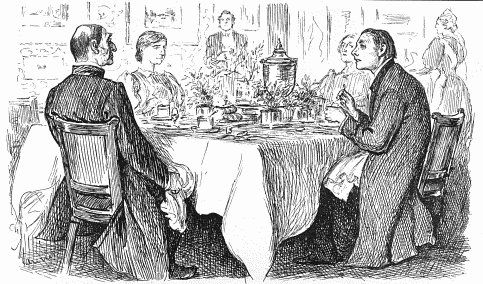
I do an exhaustive/exhausting reading of the English language weeklies every Sunday afternoon/night to produce a summary analysis for my main clients by Monday morning. It is an extremely painful task and I am always tempted to quote that famous Punch magazine cartoon from November 9 1895 by George du Maurier to describe what I really think of these newspapers. A bishop is dining, in a formal setting, with a junior curate:

Bishop: “I’m afraid you’ve got a bad egg, Mr Jones”;

Curate: “Oh, no, my Lord, I assure you that parts of it are excellent!”  

But I never actually say that, because there are always a few articles, features and editorials in all four of these newspapers that are truly excellent: well researched, well written and insightful; and it would be untrue and unjust – and a little arrogant – for me to suggest they all stink by virtue of being surrounded, as they are,  by rotten, ill-informed and sensationalist rubbish.

So back to the title question.*

The Sunday Times has Motlanthe rejecting Zuma’s deal of the deputy presidency in exchange for him (Motlanthe) not standing in the presidential race.

It’s a particularly poorly structured story (trying to get away with suggesting a whole range of things without actually saying any of them) although it is full of tantalising tidbits.

So lets take the hints (from all four of the mentioned newspapers) as real possibilities:

  • Motlanthe stands against Zuma;
  • Unraveling patronage networks, especially in eThikwine, open(s?) the possibility of driving a wedge in Zuma’s Kwazulu-Natal support base;
  • To strengthen his ticket against Motlanthe, Zuma offers Cyril Ramaphosa the deputy presidency;
  • Gauteng suggests Joel Netshitenzhe as part of the Motlanthe challenge – essentially to stand against Gwede Mantashe (who’s a cornerstone of the SACP support for Zuma);
  • Winnie Madikizela-Mandela comes out more explicitly anti-Zuma (especially of his handling of Julius Malema) and supportive of  the putative Motlanthe challenge.

So what do we have there?

A Zuma, Ramaphosa, SACP ticket versus a Motlanthe, Netshitenzhe, Winnie, Malema ticket?

Oh Lord, give me strength.

Can’t we have a Joel Neshitenzhe, Cyril Ramaphosa ticket supported by Motlanthe and opposed by the ANC Youth League, Winnie Mandela and an unholy alliance of the Kwazulu-Natal and Mpumalanga patronage networks? (I have written previously about Joel on this website here,  here and here.)

That desire is the moral and intellectual equivalent of arm-chair sports selecting. It would be nice … as would a leadership consisting of a young and vigorous Nelson Mandela, Oliver Tambo, Walter Sisulu …

So quickly, before I go back to picking my way through the odorous wreckage of the four weeklies spread out on my table and floor (the soul-crushing banality of etv’s Sunday afternoon offering in the background and the Cape Town winter sun finally beckoning outside):

What happens at Mangaung will not decisively determine the character of the ANC.

Polokwane was billed as a major rescue attempt – saving the ANC from the dead hand of Mbeki and rolling back the power of the narrow BEE elite which was allied to the most predatory forms of global monopoly capitalism.

Polokwane was going to reinstill the movement with idealism, energy and enthusiasm and channel it into ‘a pro-poor strategy’.

Well, we know how that played out.

Mangaung, like Polokwane, was a result of a complex interplay of forces and contests that go deep into South Africa’s past.

I cannot honestly argue that Jacob Zuma is a better or worse candidate for the ANC or the South African presidency than Kgalema Motlanthe – although I accept that some people can and do (with a lot of enthusiasm).

However, politics is a matter of contingency. It really is the art of the possible … in this sense it is full of difficult compromises.

Any individual who finds him or her self in an ANC branch or region or leadership position, will be faced with choices that, when aggregated, will shape the future of the ANC and, quite possibly, the country. (The same is, of course, true for any South African, inside or outside the ANC.)

Those choices might be circumscribed – by history, by existing power structures and alliances, by the momentum invested by those who control the patronage networks and by wherever it is that the individual finds him or her self.

But if you are not going to throw up your hands in despair and retreat to your bed forever, if you are unable to cut and run, then you have an obligation to make some kind of decision and choice.

I do believe that what the ANC becomes matters – although what it becomes is not going to be determined at Mangaung or as a result of it being led by Kgalema Motlanthe or by Jacob Zuma.

(Note added a few hours later. On reflection, I might have empasised that the cartoon is even more apt for the ANC than it is for the English language SA weeklies … it was meant to be suggested, almost by my omission … but on reflection, I think I will spell it out … which I have now done.)

My growing worries about the ANC’s plans for economic intervention

Remember kaleidoscopes?

Basically a tube that you held up towards a light and peered through as if it was a telescope?

But unlike kid’s telescopes –  which, like kid’s microscopes, were blurry and disappointing and stupid – the kaleidoscope was a device of astonishing power and beauty.

The point for my six-year-old self who received his first kaleidoscope for a birthday, probably, was the power that little tube put in my hands.

The simple expedient of  twisting one end caused visions of astonishing, luminous, grandeur to pour out the other.

I can still feel that tingling as if I was balanced on a precipice, reaching out to shape a whole universe; causing tectonic shifts in the intrinsic structure of reality … okay, maybe not that last bit … but you get the point.

Such power … and I had absolutely no idea how it worked.

My “device of power and beauty” was a semi-rigid cardboard tube with loose coloured translucent beads or pebbles in the end and two mirrors running lengthways up the inside, duplicating images of the transparent junk that tumbled as the tube was rotated.

My first kaleidoscope wilted in my sweaty, meglomeniacal hands a few hours after I had torn it from its pretty wrapping – and I cut myself on a broken piece of mirror as I desperately pounded it to make it continue producing those wondrous images.

Which brings me to my worries about ANC policy making.

I am slightly more worried today than I was when I wrote the piece below (July 2) just after the conference.

That is partly because I have thought further about some of the issues and partly because the consensus points within the ANC seems to be slippery – and therefore uncertainty is rising.

In short my worry is that the ANC is approaching more vigorous economic intervention with the enthusiasm and growing expectations of my six-year-old self after he first looked through his pretty new cardboard tube.

I think the likelihood of this all ending in tears in increasing exponentially – and the reasons are not very different from those that caused the ruin of my first kaleidoscope and my cut finger.

I will pursue this theme (the threats involved with increasingly desperate state interventions – especially those that worsen the problems they promise to fix) in future posts, but first my initial take on the conference; written just after having read the particularly awful English language Sunday newspapers of July 1:

Much ado – and confusion – about the ANC policy conference

The teams of journalists from the political desks at the Mail & Guardian, the City Press, the Sunday Times and the Sunday Independent could have been covering different conferences given the divergence of their understanding of what went down at Gallagher Estates in the Midrand from Tuesday to Friday last week.

This is my first attempt at a distillation of the main points – partly of the coverage, partly of what was supposedly being covered:

  • Debates about policy and the struggle over who will be elected to the top positions in the ANC at the National Conference in December became blurred, to the detriment of both.
  • The “Second Transition” concept became associated with Jacob Zuma (even though it was penned by his factional enemy, Tony Yengeni) and its rejection by most commissions at the conference was interpreted as a set-back to Zuma’s re-election campaign.
  • The power struggle obscured the fact that there was general consensus that transformation is “stuck” and radical and urgent action to hurry the process along needs to be taken if the ANC is to keep the trust and support of its majority poor and black constituency.
  • The report-back to plenary of the key breakaway commission on mining became the most blurred moment, when Enoch Godongwana presented a summary of the views on the state’s proposed involvement in the mining sector – with pro-Zuma provinces KwaZulu-Natal, Mpumalanga and Free State tending to go with the SIMS compromise and the other six provinces tending to support the ANC Youth League in a strengthened nationalisation position.
  • When consensus is finally reached, it is likely to include an even stronger role for the state-owned mining company – perhaps giving it the right to take significant stakes in all future mining licenses issued. Absolute taxation levels might be an area of compromise between the state and the mining sector in negotiations about this matter in the final lead-up to Mangaung where policy will be formally decided.
  • There was broad consensus that the state could and should force the sale of farmland for redistribution purposes and that an ombudsman be appointed to determine ‘a fair price’ – to prevent the process being frozen by white farmers holding out for better terms. It is not clear whether this would require a constitutional amendment.
  • There was general consensus that the Media Appeals Tribunal is no longer necessary, that the number of provinces needs to be reduced, that the proposed Traditional Courts Bill is reactionary and against the constitutionally guaranteed rights of women and children in rural areas, and that the youth wage subsidy (as a tax break to employers) had to be sweetened, or replaced, with a grant directly to young job seekers.
  • The push for “organisational renewal” will require a number of changes: a probation period of 6 months for new members, a 10 year membership requirement before such members can be elected to the NEC, a reduction of the size of the NEC from 80 to 60 members and a downgrading of the status of the Leagues (women, veterans and youth) so they more directly serve the interests of the mother body.

So if this was a soccer tournament, what is the score?

The City Press led with “Tide Turns Against Zuma”, but frankly I think this is more about that newspaper’s preferences than anything else. The ideological disputes in the ANC are complicated but broadly follow an Africanist/nationalist group versus a SACP/Cosatu/anti-nationalist group. Neither Jacob Zuma nor Kgalema Motlanthe are clearly in either camp (but Zuma tends towards the former and Motlanthe towards the latter). Only one potential challenger, Tokyo Sexwale, is firmly in one group (the nationalists, which is the ideological home of the ANC Youth League) and he has more chance of passing through the eye of a needle than winning this competition.

Only Motlanthe could seriously challenge Zuma in a succession race and despite all the rumours and leaks it is by no means clear whether he has any intention of running – or, if he did, whether he would have a significantly different policy agenda than that being pursued by Zuma and his backers.

Greeting – and a few thoughts of home – from Belgrade

I am in Serbia on a social visit and I thought I would record here some of my initial observations about stuff we might learn from this country about some aspects of SA politics and culture.

Cultural Betrayal

Firstly, I am in Belgrade – a city of 1.6 million people built on the confluence of the Danube and the Sava – and a peculiar mixture of modern flash, Soviet-era bland and medieval tatty. The scars of the Nato bombings are still dramatically evident in a sort of carefully preserved tableau, a series of monuments to that seminal betrayal, that you can’t miss on your way in from the airport

Serbian/Yugoslav Army HQ? Taken a few minutes ago (thanks Jaimo) – I will double-check what the building’s original function was … before it (and a few of its neighbours) were bombed on May 1 1999, becoming (permanent?) monuments to Western perfidy

Why betrayal? Because everyone my age here has the same (as me)  … memealogy? (okay, I made it up – memes are cultural genes and you can work it backwards from genealogy). The cultural literacy is all Rolling Stones, Sam Peckinpah, Bruce Springsteen, Warren Zevon, The Alien, Bob Dylan, The Beatles and Billy Joel (you dredge up the cultural icon from the 60s, 70’s and 80’s and I bet I share it with Serbians of an appropriate age – except they are more culturally literate. Interestingly, just like in Yugoslavia, in SA we got this stuff a few years late – in SA because of apartheid and National Party awfulness, in Yugoslavia because of a slightly different set of transgressions.)

… and then one day their beloved Americans and English cultural tutors bombed them and killed the firemen trying to save people from the buildings – ostensibly to stop some new, particularly ugly, transgressions. Oh the treachery, the faithlessness …

Ethnic uniformity

The second thing that strikes me is the populace is ethnically identical. They are all white. There are no black people, no Arabic looking people; no any kind of people who are in any way different looking from what I think of as Slavic – which is just a minute variation on your bog standard white person – the men with chiseled features and the women with unusually long legs and everyone with white skin … not olive or dusky or anything, but white – in the old Apartheid conception of the skin colour.

“The city was more cosmopolitan”, my Serbian friend tells me, “before the disaster of Slobodan Milošević – before then you could see more  Croats, Bosnians, Macedonians, Montenegrins, Muslims, Slovaks …”

We are wandering down a medieval street crammed with crowds of handsome young people. I ask him to show me some individual examples of these groups that survived the virtual and literal ethnic cleansing that accompanied the collapse of Yugoslavia.

His attempt seems half-hearted, even dispirited.

“Hmm maybe she is Croat,” he says indicating a woman flicking through some blouses at a street kiosk. She is one of the tall, long-legged, light-brown haired, chiseled cheek-boned and haughty beauties that shoal in these alleys, as ubiquitous as sardines at the right time in Durban.

“Ok, maybe not” he shrugs as I frown at him in confusion.

We finally manage to agree that “those gypsies” selling knock-off Ray-Bans look ethnically dissimilar to the majority. But to me  it’s a margin call – any one of them could have been my old ‘Leb’ Catholic chinas in the Johannesburg of my youth; definitely ‘white’ under apartheid’s racial taxonomy.

Remember it took the terror of ethnic cleansing to create this level of uniformity, but even before that, in the old Yugoslavia, the full range of ethnic diversity could have been encompassed by the differences between, say Rafael Nadel and Charlize Theron …

Let’s compare monstrous barbarisms

Everyone here above a certain age seems haunted by what happened after the collapse of Yugoslavia. You would think that this lot would be immunised to bombs, betrayals, racial and religious purging and radical disjuncture in their social organisation.

It started with the Celts invading  the “Paleo-Balkan tribes” in 50 000 BCE  (okay, I’m exaggerating) who in their turn were replaced by an endless Roman occupation; sacked by Attila the Hun in 442 and then one thousand five hundred years of bloody, impossible to follow conquest, resistance, sacking, rapine, pillage … I could go on and on. It was the Byzantines, the Franks, the Bulgarians, the Kingdom of Hungary, the Crusades, the Serbian Empire (briefly) the Hungarians again, the Ottomans (for five hundred years! … and yes, they did persecute the Christians but not half as badly as the Christians did to almost anyone of any other faith during the Crusades … and there are a whole lot of beautiful and ancient churches that the Ottoman-Turk conquerors and rulers left standing) and the Austrians.

And of course, that is only before the First World War, and as you know all the important stuff happened since then.

I know our African and South African histories are important and it is appropriate that we wrestle as long as it takes – which will be forever, obviously – with the ongoing consequences of slavery, colonialism and apartheid.

But being here does tempt me to wish my countrymen and women had a slightly less myopic view of our own trials and tribulations.  I read this morning that Belgrade is trying to scrape together the finances to build a memorial to Judenlager Semlin, the largest German-run concentration camp in Southeast Europe where in May 1942 the Nazi’s proudly announced one of their first major European campaign successes: Serbia was “Judenfrei”. The men had been executed earlier, but the last 7000 Jewish women and children were killed in the camp in the first few months of 1942.

By May Serbia was Judenfrei.

And this is not a The Holocaust trumps all kind of statement – I just mention it  in the context of the previous 2000 years of European history. The Germans might have achieved a unique scale with their technological and organisational excellence, but the great rivers of cruelty and tears are old, deep and cold here and they flow through every valley of this geography – and not only to and from the mighty lake that was The Holocaust.

The Economy and the European Debt Crisis

The Serbian economy has hit the wall and the government is trying to decide on a balance between cutting public sector wages and salaries by about 6% and increasing VAT to about 22%. The options are limited and there is an absolute consensus that extremely hard times have arrived. This is the European debt crises writ slightly smaller – because Serbia is not part of the European Union.

But what I see are people eating and drinking in restaurants – and partying as hard and as healthily as it gets.

There are almost no beggars – and those that there are are obviously professionals with studied acts:

  • the near-sighted (with ridiculously cute thick glasses) slightly retarded child playing – very badly – the violin, every item of clothing and scuff on his thick medical black shoes a carefully choreographed act that everyone consents to and ignores.
  • An old hunched-backed crone, her nose not six inches from the floor, tapping along on a short, gnarled staff, an arthritis crippled hand held out blindly above her … I am convinced she is a 22-year-old actress who couldn’t find a waitressing job.

The point is there are none of the streams of dead-eyed, exhausted people searching and researching the refuse; people you will find in any South African city. There is a medieval character to Belgrade, which means there are a million nooks and crannies and little hollows in ancient buildings and monuments everywhere. In South Africa those would all be occupied – where they were fenced, the fences would be broken and tunneled under – there would be evidence that someone was eking out an existence in every hollow, in every gap.

But here, nothing.

Sure, there is an occasional drunk sleeping on a park bench, but that is pretty much as bad as it gets. I have absolutely no doubt that I am not seeing the whole picture and certainly there are large areas of the city with awful Soviet-era council housing-type tenements, covered for 10 metres from street level with graffiti that looks to me just like Cape Town’s gang signs.

In South Africa we feel like we are bursting out of our seams, with the poor competing intensely for the leavings of the rich and thereby driving some kind of desperate but highly energetic economy. Here it feels older and emptier, certainly dowdy in places, but calm and stoic.

Everyone has time for a coffee and a rakia.

Don’t get me wrong. These people descend from women who have thrown their babies onto invader’s spears; their forefathers and mothers have eaten dogs and rats and stones to stave off the inevitable rape and slaughter that awaits the fall of the castle walls; they have catapulted the last live chickens at their enemies who have besieged them for years, and successfully convinced the invaders to just give up and go home.

So I  am not exactly saying that this is tired old Europe with nothing left to do but casually sip a coffee in the shade, sneering at the inevitable heat death that comes with impossible debt, dipping personal income and stagnant growth – of the economy and the population.

I am also not exactly saying that we are fresh and chaotic and ready to burst onto the global stage with the vigour and desperate energy of youth.

But there’s something in there, some little kernel or nugget – maybe a hope that I haven’t quite allowed myself to feel yet …

But it’s mid-afternoon and so hot that it is impossible to process this any further. Time for my first rakia and 4th double espresso – I’ll think about this tomorrow.

The Second Transition

Occasionally I publish slides from a current presentation series and here are a few from something I am busy with called: “The Second Transition – SA politics and policy somewhere twixt hither and yon”.

The general idea is the ANC government is determined to move beyond the ‘transitional’ arrangements that it agreed to in 1994 and strike out boldly towards some undefined, but more profoundly transformed future.

I start with a quote from Jeff Radebe at the launch of the ANC discussion documents in early March … which sets the atmosphere of the ANC proposals.

Then, taking some liberties, I summarise what the ANC is “really” (in my humble opinion) saying in motivating the documents:

I then set out on the difficult task of attempting to assess whether the ANC documents actually propose anything as thoroughgoing as the initial motivation implies.

Frankly, the answer is “no”; although the proposals are both worrying in tone and in how contradictory and “bitty” they are.

The best formulated document is the “Maximizing the Developmental Impact of the People’s Mineral Asset: State Intervention in the Minerals Sector (SIMS) – document (get a link to that here). It contains a thoroughgoing set of proposals that change the tax system for mining and propose a complicated set of upstream, downstream and sideways linkages for the industry that will create a new set of burdens and obligations (not all bad) for the mine owners. (My own feeling about mineral resources is that these are “non-renewables” and government is obliged to get the maximum developmental benefit out of them before they are lost forever – but that is just by the way.)

Almost every other document – and there are 12 in  all – meanders between

  • being meaningless wish-lists,
  • statist and authoritarian  blueprints to bully and control and
  • well researched and argued guides to fixing key aspects of what is wrong with our society

Almost all the good stuff is lifted body and soul from the meticulously researched National Development Plan with its focus on the 9 challenges of

  • widespread unemployment
  • ailing infrastructure
  • low standards of education
  • exclusion of the poor from mainstream development
  • a resource dependent economy
  • a failing public health system with a large disease burden
  • inept public service provision
  • widespread corruption and
  • societal divisions.

My presentation itself does not make strong predictions on how far the ANC will get with its deliberations … although what is clear is that policy discussion this whole year will be drowned out by the Mangaung election noise. It is is going to be difficult to ascertain any real direction through the clamour of the struggle to re-elect Jacob Zuma.

Leaving aside all the slides that deal with the actual documents, I do, however conclude by asking some questions of our key players … and I include those slides here for your interest:

As the months go by, I will hopefully have time to flesh out some of those question.

But for now I am in the final days of the road show trying to make sense of  the mess of proposals and hints in the documents, which span issues as diverse as fracking the Karoo, IDZ’s to SEZ’s, the Treasury versus EDD versus DTI, local procurement fantasies, some excellent fixes of BEE from Rob Davies,  the lonely excellence of the Gordhan and Marcus and infrastructure looking more and more like the ANC’s one-trick-pony.